Failure at Davos
- By John Ross
 0 Comment(s)
 Print
Print E-mail China.org.cn, January 30, 2012


This year's Davos World Economic Forum (WEF) was not a significant step forward in resolving world economic issues. Christine Lagarde, head of the IMF, summed it up when she got out her handbag and told a WEF panel: "I'm here with my little bag to collect a bit of money." While you would scarcely expect a reply in an open session, the key players who could have taken such decisions weren't at Davos.
|
|
|
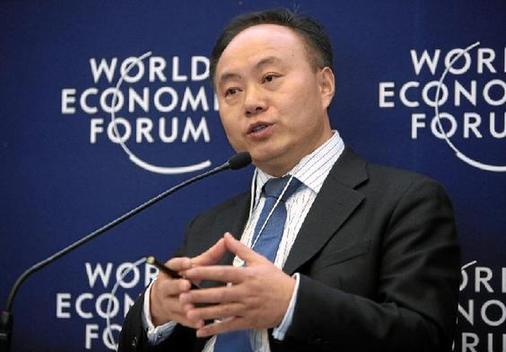
Shi Zhengrong, chairman and Chief Executive Officer of Suntech Power, People's Republic of China, speaks during the session "Sustainability Champions" at the Annual Meeting 2012 of the World Economic Forum at the congress center in Davos, Switzerland, Jan. 28, 2012. (Xinhua/World Economic Forum/Monika Flueckiger) (Editorial Use Only, No Commercial Use, No Archive, Not For Sale) |
This was partly a self-inflicted wound. Davos's organizers were warned in advance that holding the Forum during China's Spring Festival would exclude its most senior officials - no-one would dream of holding Davos during Xmas! Less avoidably, as most senior US political figures are pre-occupied by the coming presidential election, United States participation was less heavyweight than normal. As the world's most important economic problems clearly can't be sorted out without the U.S. and China, the real actors were not in Davos this year. Solemn warnings at final sessions on the need to combat youth unemployment don't compensate.
But there is a more fundamental reason Davos has lost its edge. The two times I was there with the Mayor of London, in January 2007 and 2008, Davos' ethos was at its peak and very clear. It believed an essentially free market globalized system would solve the world's problems. Davos's intellectual cutting edge was that it rejected the idea that this would happen purely spontaneously, and significant measures of philanthropy and some limited state intervention were required.
Davos's symbol, and physically present guru, was Bill Gates. Then the world's richest man, but who had stood down from day to day leadership of Microsoft to devote himself to his philanthropic foundation, he symbolised Davos's ideal - the essentially free market globalized economy could be relied on to deliver wealth but its greatest beneficiaries must ensure some benefits reached everyone.
That narrative was shattered by the 2008 financial crisis. In every developed economy the privately owned financial system disintegrated. Only state intervention kept the banking system afloat and stopped the world experiencing a repeat of the 1930s Great Depression. Global bankers, who previously were seen as architects of global growth, are now among hate figures in Western popular culture - with politicians attempting to outdo each other in demanding their salaries and bonuses be cut. While there is more sympathy for productive businesses even that has eroded - the "trust barometer", produced by the leading international PR company Edelman, found that just 53 percent of the population in the 25 countries surveyed now trust private business.
Feeding these public moods is not only the shock of 2008 itself but that Europe is entering a new recession, US GDP growth is its lowest in any business cycle since World War II and the income of middle Americans has been falling. The mood was somewhat strangely captured when UK streets were recently adorned with billboards advertising a two week series on "The Crisis of Capitalism" - which turned out not to be in a socialist journal but in the Financial Times. Given such a prevailing mood Davos's message that free markets plus philanthropy and light regulation delivers what is economically required no longer fits the mood.
It is equally clear that the most powerful ideas are not being generated in Davos. The Eurozone debt crisis is being tackled through a series of harsh confrontations between the German, French, Greek, Italian and other governments. In the U.S. the Democrat presidential administration and the Republican controlled House of Representatives have been locked in struggle. China's stimulus package dealing with the financial crisis was led by the government. Latin America, where left wing candidates have won almost all recent presidential elections, together with China accounted for more than half of global growth in 2007-2010. On a global scale it is the state, not the free market, which has moved more centre stage.
This is reflected in economic discussion. Theorists of "efficient markets hypothesis" and "deregulation" have been pushed to the margins after their failure to predict the crisis of 2008 or propose adequate means for tackling it. In the U.S. economists who were previously considered "way out to the left", such as Joseph Stiglitz and Paul Krugman, are widely heard in public discussion - Paul Krugman has over 700,000 Twitter followers, which would normally be considered more in the range of a film star than an economist!
Within international institutions the most creative ideas are not those emerging from Davos but from China's Lin Yifu, chief economist and senior vice president of the World Bank. He has produced a series of articles and speeches on "Beyond Keynesianism", with his books Demystifying the Chinese Economy, and New Structural Economics being published in English. Martin Wolf, chief economics commentator of the Financial Times, recently noted that Lin was typical of a "phenomenon", a "self-confident Chinese scholar and global policymaker… he is distinctively Chinese: professional, patriotic and, above all, pragmatic."
Lin is far from traumatized by recent economic events - writing in New Structural Economics: "'The golden age of finance has now ended', as [leading US economist] Barry Eichengreen commented recently in reference to the Great Recession. In my view, however, the golden age of industrialization in the developing world has just begun… For a sustainable global recovery and robust growth in the coming years, the world needs to look beyond the Euro Area and sovereign debt worries… During my travels in the past three and a half years… I have been struck by the potential for less developed countries to take a page from the playbook of more successful industrializing East Asian countries, such as China, Indonesia, Japan, Korea, Malaysia, Singapore, and Vietnam, and to dramatically improve their development performance."
Lin's perspective is well founded. During the international financial crisis many of the most important developing economies slowed, at most, marginally - compared to deep crisis in the U.S. and Europe. But the state guided development path pursued by China, South Korea, or Singapore was not that of the ideas previously dominating Davos. Furthermore, China is not only important itself but also as the largest developing economy.
News coming out of Davos as the event closed was that the organizers understood they had made a mistake and in future the forum would be pulled forward earlier in January to avoid both Xmas and China's Spring Festival. It would seem a very necessary adjustment.
The author is a columnist with China.org.cn. For more information please visit: http://www.ccgp-fushun.com/opinion/johnross.htm
Opinion articles reflect the views of their authors, not necessarily those of China.org.cn.


