| |
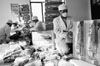 Prior
to the peaceful liberation in 1951, modern industry did not exist
in Tibet. During the period of the 13th Dalai Lama, the local authorities
once opened a small arms factory and a small mintage, which were
soon on the verge of bankruptcy. In 1931, a 92-kw hydropower station
was built at Togde Gully in the north of Lhasa, but was destroyed
by a rush of waters in 1944. These three plants had no more than
120 workers. Prior
to the peaceful liberation in 1951, modern industry did not exist
in Tibet. During the period of the 13th Dalai Lama, the local authorities
once opened a small arms factory and a small mintage, which were
soon on the verge of bankruptcy. In 1931, a 92-kw hydropower station
was built at Togde Gully in the north of Lhasa, but was destroyed
by a rush of waters in 1944. These three plants had no more than
120 workers.
There are now 10-odd industrial sectors in Tibet, including electric
power, mining, wool spinning, forestry, food processing, printing,
building materials and machining. They boast over 260 small and
medium-sized enterprises, with some 51,000 employees in State-owned
enterprises.
In 2001, Tibet's industrial added value reached 1.084 billion Yuan
or 6.7 percent more than in the previous year. In the year, Tibet's
industrial output value rose 8 percent from the previous year to
reach 1.998 billion Yuan.
When divided according to economic type, the output value of the
State-owned enterprises dropped 1.6 percent from the previous year
to 851 million Yuan; the output value of the collectively owned
enterprises downed 3.2 percent to 492 million Yuan; the output value
of the shareholding cooperative enterprises rose 14.5 percent to
70 million Yuan; the output value of the companies limited rose
150 percent to 27 million Yuan; the output value of the shareholding
companies limited rose 33.5 percent to 399 million Yuan; the output
value of the privately owned enterprises decreased 3.5 percent to
47 million Yuan; and the output value of the Sino-foreign joint
ventures fell 25.5 percent to 5 million Yuan.
The output value of the light industry rose 11.7 percent to 725
million Yuan, and that of the heavy industry upped 6.9 percent to
1.193 billion Yuan.
Modern Industry
The Lhasa Carpet Factory, the first modern plant of Tibet, was built
in 1953. In 1955, the Togde Hydropower Station was rebuilt with
an installed capacity of 660 kw. After 1957, the Tumain Coal Mine,
the Pangkog Borax Mine, the Ngaqen Power Plant and the Golmud Brickyard
were constructed one after another and began to create wealth for
society. Meanwhile, the Central Government implemented a policy
of low-interest loans and assistance for the local handicraft industry
to encourage its steady development.
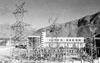 Between
1959-60, during which the Democratic Reform was carried out in Tibet,
much headway was made in the region's borax, coal, cement and power
sectors, with supply gradually satisfying demand. At the same time,
farm machinery, motor repair and auto accessories processing, food
processing, light and textile industries began to be developed.
Basic industries, such as the Lhasa Edible Oil Mill, the Lhasa Flour
Mill, the Lhasa Food Products Factory, the Nyingchi Woolen Mill,
the Tibet Match Plant, and tanneries in Nagqu, Qamdo and Xigaze
areas, developed rapidly. Between
1959-60, during which the Democratic Reform was carried out in Tibet,
much headway was made in the region's borax, coal, cement and power
sectors, with supply gradually satisfying demand. At the same time,
farm machinery, motor repair and auto accessories processing, food
processing, light and textile industries began to be developed.
Basic industries, such as the Lhasa Edible Oil Mill, the Lhasa Flour
Mill, the Lhasa Food Products Factory, the Nyingchi Woolen Mill,
the Tibet Match Plant, and tanneries in Nagqu, Qamdo and Xigaze
areas, developed rapidly.
When the Tibet Autonomous Region was established in 1965, more than
80 small and medium-sized industrial enterprises, which consumed
locally available raw materials, played an active role in enriching
the people's material life and developing production.
When the reform and opening policy was introduced throughout China
in 1978, the regional government determined a guiding principle
of promoting the development of all sectors by boosting the four
mainstay industries of electric power, mining, light industry and
textiles, and ethnic handicrafts. Since then, various basic industrial
facilities have been constructed or expanded, including the Dongqu
Power Plant in Xigaze, the Oiga Power Plant in Shannan, the Xiando
Power Station, the Yangbajain Geothermal Power Station, the Puncog
Power Plant, the Famo Gully Power Plant at Bayi, the Lhasa Hydropower
Plant, the Lhasa Brewery, and Shannan and Norbusa chromite mines.
These facilities have played an important role in promoting the
Tibetan economic development and social progress.
In the mid-1950s, an attempt was made to remedy the power shortfalls
resulting from Tibet's lack of oil and coal resources, leading to
the construction of the region's first public power enterprise,
the Lhasa Power Station. Subsequently, the State invested in building
China's largest megawatt-class geothermal power station at Yangbajain.
More recently, construction began on two additional power facilities---the
Yamzhog Yumco Pumped-Storage Power Station and the Chalung Power
Station. The former, using 2.014 billion Yuan of State investment,
was completed and began to generate electricity in 1997. In 1996,
the Tibet Autonomous Region had a total installed generating capacity
of 194,000 kw, with annual power production standing at 515 million
kwh.
Each year, Tibet mines more than 112,000 tons of chromite, 1,500
tons of borax and 16,000 tons of boromagnesite. Shannan and Norbusa
chromite mines have gone into production.
Light Industry and Textiles
With the development of animal husbandry, the textile and other
light industries have been built up in the Tibet Autonomous Region.
Leather production in the region is a sector of unique Tibetan features.
Tanneries in Nagqu, Xigaze, Qamdo, Ngari and Lhasa produce more
than 50 varieties of products, including heavy leather, light leather,
fur and leather clothing, leather shoes and horse gear. With the
aid from the Federal Republic of Germany, the Lhasa Tannery invested
13 million Marks in imported equipment, technological upgrading
and expansion in 1988 to build an annual capacity of processing60,000
pieces of hide, and producing 40,000 pairs of leather shoes and
10,000 other leather articles. Since the reform centering on the
establishment of modern corporate system, the Lhasa Brewery has
steadily improved the quality of its products, winning the title
"Established Star Chinese Beer for 1994"
Ethnic Handicrafts
The Democratic Reform in 1959 enabled the Tibetan ethnic handicraft
industry to experience rapid recovery and development. Between 1959-65,
the local ethnic handicraft industry increased to comprise 33 sectors,
with nearly 100 enterprises, more than 230 mutual aid teams and
6,670 employees. The annual output value rose from 1.24 million
Yuan prior to the Democratic Reform to 8.9 million Yuan, an average
annual increase of 32 percent.
From 1981 to 1989, the State allocated more than 23.4 million Yuan
to Tibet for the factory building expansion, technological upgrading
and personnel training in the local ethnic handicraft sector, enabling
it to witness fast growth. In 1983, the variety of ethnic handicraft
products increased from 800 in 1978 to more than 1,300. Output value
exceeded 20 million Yuan, profits approached 700,000 Yuan, and collective
wealth accumulation surpassed 2.7 million Yuan.
In 1989, the ethnic handicraft sector in Tibet had 113 collectively
run enterprises, with a total payroll of 6,700. Output value of
the sector reached 40.7 million Yuan, a seven-fold increase over
1980, and the variety of products totaled more than 1,600.
Since 1994, the Tibet Autonomous Region has vigorously developed
tourist commodity production, with remarkable economic results.
In 1996, the region earned 5.6 million Yuan in profits from the
production of tourist commodities, up 76 percent over 1985. With
the variety exceeding 730, the sales of tourist products accounted
for 15 percent of the total output value of the local ethnic handicraft
industry. With the support of the regional people's government,
the number of individual handicraft firms increased to more than
1,000, employing 4,500 workers, and their annual output value reached
2.9 million Yuan.
|
|


