|
1. Shizitan Site in Jixian County, Linfen, Shanxi Province
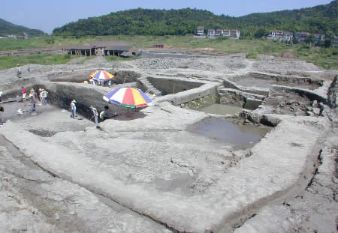
The Shizitan site is on the lower reaches of the Qingshui River, a branch of the Yellow River. It was found in Xicun Village, Dongcheng Township, Jixian County, Linfen City, north China’s Shanxi Province, on the eastern edge of the Loess Plateau.
The site is the largest and one of the most important finds that offers clues to prehistoric settlements in China between 30,000 BC and 10,000 BC. It represents life in the central plains, which is comprised of the middle and lower reaches of the Yellow River.
At the site, more than 2,000 stone implements, ornaments and animal fossils were unearthed in 2001. Among them was a delicate shell-made necklace dating back to 20,000 BC.
Traces of a campfire were discovered at the site, where it could be imagined primitive men and women could be found seated around a fire, making stone artifacts and roasting their prey.
2. Neolithic Kuahuqiao Site in Xiaoshan, Zhejiang Province
The site, located at Xianghu Village of Xiaoshan District, Hangzhou, east China’s Zhejiang Province, was excavated twice, once in 1990 and again in 2001. Carbon-14 dating shows that the unearthed relics are about 8,000 to 7,000 years old.
Dozens of Chinese archaeologists believe that this is the earliest Neolithic culture site discovered in the province, different and totally independent from discoveries in the lower reaches of the Yangtze River. The discoveries link the middle and lower reaches of the Yangtze River together for the first time.
Large quantities of ancient cultural relics were unearthed there including sophisticated painted pottery, unglazed pottery, stoneware, carpentry and various articles of jade. These articles have their unique style -- earlier than those of the famous Hemudu and Liangzhu sites with elements more similar to ancient culture in the Dongting Lake area in Hunan Province.
3. Qijia Cultural Site at Lajia Village of Minhe County, Qinghai Province
The site is located in the Guanting Basin, at the south end of Minhe County, west China's Qinghai Province. Here human bones in unusual poses and house ruins were discovered as evidence of earthquakes and floods. They tell of a series of natural disasters in the upper part of the Yellow River 4,000 years ago, and echo records in Chinese ancient history.
Apocalyptic floods have been a staple for legends from almost every nation in the world. Yu, an ancient hero, is venerated by the Chinese as the man who diverted the great flood that struck China thousands of years ago. But little evidence of this disaster had been found in China, that is, until archaeologists found two ancient skeletons in Lajia Village.
The two skeletons were buried in a collapsed house, which was covered with a thick layer of silt deposit from the Yellow River. In this ancient grave, archaeologists found more than 20 skeletons, an altar, a square, pottery, and stone and jade utensils. Experts say the villagers were killed in an earthquake and the ensuing Yellow River flood some 4,000 years ago.
4. Wubeiling Tombs of the Shang Dynasty in Shenzhen, Guangdong Province
From April to June 2001 and from December 2001 to March 2002, Chinese archaeological workers discovered 94 ancient graves belonging to the Shang Dynasty (circa 16th Century BC-11th Century BC) and 300 precious cultural relics of different kinds while excavating the Wubeiling Ruins at Nanshan District, Shenzhen, south China’s Guangdong Province.
Cultural relics unearthed from the ancient graves on an area of about 1,400 square meters include jade articles, stone implements, pottery, as well as bronze tools for production.
The discovery was believed to be the largest tomb group of the Shang Dynasty found in Guangdong Province. It filled a gap in the pottery chronicle of the Pearl River Delta and Hong Kong and Macao special administrative regions. It proved that the Pearl River Delta, Hanjiang River Delta and Xingmei Plain in northeastern Guangdong had had exchanges with and influences upon each other during the Shang Dynasty. On one hand, it showed some common characteristics of the Central Plains; on the other, it had its own features of southern China.
The discovery provided proof that independent civilization existed in areas of today’s Guangdong Province and Guangxi Guang Autonomous Region about 3,000 years ago.
5. Jinsha Ruins of Shang and Zhou Dynasties in Chengdu, Sichuan Province
On February 8, 2001, workers at a construction site discovered the Jinsha Ruins by accident in Jinsha Village in the suburbs of Chengdu, capital of southwest China’s Sichuan Province. Since then, archaeologists have excavated more than 1,000 precious relics, including gold, jade, bronze and stone wares as well as nearly 1 ton of ivory. Most of the pieces date back some 3,000 years. Many of the relics bear strong resemblance to those at Sanxingdui.
Jinsha Ruins show a certain design in structure. The northeastern part of it, called “Meiyuan”, was once an area for religious ceremonies; the central southern part, “Lanyuan”, was a residential area; while the central part, “sports garden”, was both a residential area and an area for tombs.
Relics unearthed at Jinsha made archaeologists believe that Sichuan not only had trade links with the Yangtze and Yellow river valleys, neighboring Yunnan and Guizhou provinces, but also northern Viet Nam in ancient times.
According to experts, Chengdu probably became a center of politics, economy and culture after the decline of Sanxingdui. So it is believed to be key to solving the riddle of Sanxingdui's decline.
6. Kele Cemetery in Hezhang, Guizhou Province
About 1,000 years after the Jinsha culture, another arcane culture flourished in southwest China. Researchers surmise that the rule by the Yelang people in the area lasted for more than 200 years from the Warring States period (475-221 BC) to the Western Han Dynasty (206 BC-AD 24).
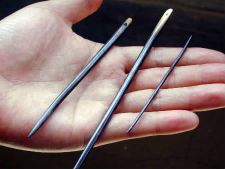
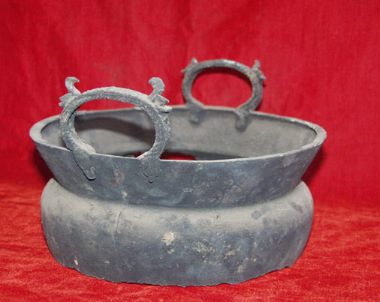
Archaeologists excavated 108 tombs of the ancient Yelang people in Hezhang, Guizhou Province, and found 540 artifacts including bronze swords, U-shaped bronze hairclips, tortoise bracelets and jade necklaces.
The corpses in the tombs all had bronze cauldrons covering their heads. This burial custom greatly enriched the knowledge of the contents of the Bronze Age Yelang culture.
7. Leifeng Pagoda Ruins in Hangzhou, Zhejiang Province
Leifeng Pagoda ruins are near the scenic West Lake in Hangzhou, capital of Zhejiang Province. The ruins were formed on the debris after the Leifeng Pagoda collapsed on September 25, 1924. In 1997, it was announced as a unit under the protection of Zhejiang Province. From December 2000 to July 2001, the Cultural Relics and Archaeology Research Institute of Zhejiang focused its work on the exploration and excavation of the underground palace, base and periphery of the Leifeng Pagoda.
Leifeng Pagoda was an octagonal, five-storied structure built of brick and wood. The body of the pagoda was made of brick, but the eaves, balconies, inside landings and balustrades were made of wood. The wood structure of the pagoda decayed in later generations, but the brick-built pagoda body remained.
Some 40 pieces of precious relics were uncovered after archaeologists opened up a cellar less than a cubic meter in space in the ruins. Among silk, jade, bronze, leather and coins coming successively out of the cellar, the most important discovery of all was a bronze Buddha statue on a lotus base and an iron box probably containing spiral hair of Buddha, a special sacred trace of the Buddha. Inscriptions such as “Xinwei” (AD 971) and “Renshen” (AD 972) were found on most of the bricks, implying the age of the building of the Leifeng Pagoda.
8. Jun Kiln Ruins in Yuzhou, Henan Province
Pottery from the Jun kiln was an important branch of such products during the Song and Yuan dynasties in north China. Historical documents listed it as one of China’s five most famous kilns of the Song Dynasty, but no sound proof to show the enameled pottery originated from the Song Dynasty.
Approved by the State Administration of Cultural Heritage, the School of Archaeology and Museology of Peking University joined the Cultural Relics and Archaeology Research Institute of Henan Province to conduct positive excavations on the major part of the Jun kiln, which was located in Shenhou Township, Yuzhou City, Henan Province. The work started on September 26, 2001 and concluded on December 27 the same year.
The excavation helped confirm the beginning, development and prosperity periods of the Jun kiln. Archaeologists decided the three periods as late as the Northern Song Dynasty to early Kin period, late Kin to early Yuan Dynasty and the Yuan Dynasty.
The Jun pottery was thought to have reached the highest level of technique and often used as tribute to imperial courts.
Of the eight kiln furnaces cleared up, five were well preserved. The discovery filled a gap in the study of development history of handicraft industry in north China from Tang to Yuan dynasties. It would also promote the study of pottery making at that time.
9. Southern Song Kiln in Laohudong, Zhejiang Province
The Laohudong (Tiger Cave) kiln, an imperial porcelain workshop dating back to the Southern Song Dynasty (1127-1279), was found in September 1996 in the west end of a narrow gully between Fenghuang (Phoenix) Mountain and Jiuhua Mountain in Hangzhou, Zhejiang Province. Since then, archaeologists have conducted massive excavations and discovered a large cache of fine porcelain ware as well as the ruins of seven kilns, four mud pools, two glazed jars and 24 pits of broken porcelain pieces.
The discovery has convinced the archaeologists that the workshop is the so-called Xiuneisi Imperial Porcelain Workshop, one of the two such workshops built by rulers of the Southern Song Dynasty, which had Hangzhou as its capital.
Through careful investigation and excavation, archaeologists got a complete picture of the official workshop and obtained detailed materials for the future study of the production, operation and management of imperial workshops of the Southern Song Dynasty.
10. Mansion of the Southern Song Empress Gongsheng Renlie in Hangzhou, Zhejiang Province
It is the best-preserved imperial garden of the Southern Song Dynasty found in Hangzhou, or even the whole country, offering significant materials for the study of the garden structure and style in this period.
From May to September 2001, the Hangzhou Cultural Relics Institute of conducted salvage excavations on the Wuzhuang construction site. About 1,800 square meters were unearthed. The mansion of the Empress Gongsheng Renlie was composed of major rooms, backyard rooms, courtyard, east and west wing rooms and passageways. The house base and ground were all rammed when being built. The room base was wainscoted with bricks. The square pool in the courtyard and passageways with perfect drainage equipment were extremely exquisite. The rockery was also magnificent, rarely seen in ancient gardens.
History recorded that Empress Gongsheng Renlie had her own political view on state affairs management, but was also talented in literature.
(China.org.cn)
|