Behind the alarming statistics of casualties and infections in the recent bird flu outbreaks, one important factor is gaining increasing attention: the welfare of the animals.
Viet Nam researchers reported last year that bird flu virus mutated to become infectious to human beings in the host of pigs when a high density of chicken and pigs were bred together.
In another case, the swine streptococosis endemic, a pig-borne disease that struck southwest China's Sichuan Province this July, was found to have direct links with the foul environment for raising pigs.
The farmers' primitive ways of raising stock are not the only factor that could leave animals and humans vulnerable to disease. In addition, experts said that cases of animal maltreatment can also jeopardize human health.
"All epidemic outbreaks during recent years are in fact problems of animal welfare," said Zhang Li, a professor at the College of Life Sciences at Beijing Normal University.
Mistreating livestock and poultry could only lead to their reduced immunity, so the farm owners would have to inject a large amount of antibiotics to prevent diseases.
The drive for quick profits has also given rise to malpractices, thus endangering human health.
Not only public health is at stake. The economy also suffers.
Earlier, mad cow disease caused more than US$8 billion in trade loss in Britain. Foot-and-mouth disease occurred in Europe from 2001 to 2003. Nearly 1 million head of livestock were killed while the breeders suffered billions of dollars in economic loss.
Finding the causes
As modern animal husbandry provides rich varieties of proteins for humans, the public is becoming increasingly fearful about food safety. Moreover, the bird flu epidemic this year, triggering a flood of concerns around the world, has undoubtedly amplified that fear. The country's increasing demand for meat as more and more of its citizens lift themselves out of poverty also signals the urgency of paying attention to the link between food safety and animal welfare. So safeguarding the welfare of poultry and livestock to ensure public health and sustain economic growth has been put on the agenda.
Some experts asserted infectious disease outbreaks worldwide during recent years were connected with the improper breeding of birds and poultry.
And the impact is significant. For instance, in the swine streptococosis endemic, a total of 204 human infection cases were reported, and about 40 people died from the pig-borne epidemic.
The bird flu outbreaks since 2004 have hit 16 countries and regions. According to incomplete figures, at least 384,000 birds or poultry have been infected, and more than 140 million have been slaughtered.
Many researchers are critical of the rather primitive ways the rural farmers in China and Viet Nam raise their chicken and pigs. They suggest the farmers modernize their ways of poultry and pig rearing.
However, Zhang said that the modern factory's intensive poultry and livestock farming should also take the blame.
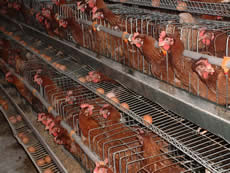
He contended that the high-density breeding of poultry and livestock made a quick large-scale spread of an epidemic disease possible while the scattered distribution of farming in the countryside made it less likely to develop an outbreak. Especially when the farm owners are chasing economic gains and neglecting animal welfare, the risk of an epidemic outbreak can be even higher.
Animal welfare
Animal welfare is a viewpoint that holds that some or all animals, especially those under human care, such as poultry, livestock, lab animals, zoo animals and pets, should be treated in such a way that they do not suffer unnecessarily.
According to Mang Ping, professor of the Academy of Social Culture and one of the earliest advocates for animal welfare in China, the international scientific advice on animal welfare takes into account five basic needs for animals: adequate food and water; appropriate comfort and shelter; the prevention, or rapid diagnosis and treatment of injury and disease; freedom from fear; and ability to display the most normal patterns of behaviour.
"Without satisfying the most basic of their needs, human beings are in fact maltreating the animals. But the needs are actually not difficult to address," said Mang, who is also a member of the executive council of Friends of Nature, a Chinese environmental protection NGO.
Animal welfare is by no means exclusive to Western countries the idea has long existed in traditional Chinese culture, according to Mang.
"Whether it's the idea of benevolence held by Confucianism or the tradition of protecting and respecting living things in Buddhism and Taoism, they all treat the animals well," she said.
However, with traditional Chinese culture undermined during modern times and the lack of an animal welfare protection law, some animals reared intensively in factory farms are the most vulnerable to harm and diseases due to maltreatment, Mang noted.
Meanwhile, as Chinese people are lifted from poverty, they are demanding more and more meat. Meat production and consumption are both increasing massively. Statistics show that 600 million pigs, 300 million sheep, 50 million cattle and 1.2 billion poultry were reportedly raised in 2004. In the global meat production, China's pork and mutton production ranked No 1 in the world; poultry meat, No 2; and beef, No 3.
The way the animals are reared is also being rapidly transformed. Instead of each person out of millions keeping one or two pigs in the backyard, commercial pig farms with thousands of pigs are being established.
Another problem is in factory farming systems where the animals are selectively bred for rapid growth or excess milk or egg production. Kept in isolation or in overcrowded sheds, they are often fed an unnatural diet and frequently prevented from carrying out their natural behaviors.
When being transported between different cities, the livestock would have to squeeze in a freight car for days. So injuries from being crushed and suffering from exposure to the scorching sun and shortage of water are quite common. "Their lives are truly lives of misery," Mang said.
Malpractices arise from the drive for quick profits. For instance, water-injected pork remains a serious public health issue. Illegal pork dealers pump water into live pigs' bodies through pipes with an aim to increase the pork's weight.
Such a practice could cause enormous agony to the pigs, according to Zhang, which could make the animals secrete some substances harmful to the health of human beings.
As the public now increasingly realizes that animal welfare is closely connected with food safety and public health, experts said that paying attention to animal welfare not just demonstrates a progress of human civilization and the humanitarian spirit, but also ensures the future health of human beings.
So far, there is still no independent law on animal welfare protection in China, but some of its principles are beginning to be embodied under the clauses of some other laws or regulations.
A new law on stock farming is being drafted and the existing law on animal epidemic prevention is being revised to safeguard the welfare of poultry and livestock in the process of transportation and slaughtering.
Recently, Beijing municipal government also set forth a new regulation on slaughtering pigs, which stipulates that pigs should be anaesthetized before being slaughtered.
Now, the Ministry of Science and Technology is revising the regulation on lab animal management with a new chapter about lab animal welfare.
"It might meet less resistance when improving lab animals' welfare as research exchanges with foreign counterparts are getting so frequent nowadays," said He Zhengming, vice-secretary of the Party committee of the China Lab Animal Academy who has been promoting the legislation of lab animal welfare in the past years.
In the new chapter on animal welfare, it stipulates that researchers must have the right understanding about lab animal welfare and should regulate their practice when doing animal testing. Also, the researchers should optimize experimental design to avoid causing lab animals any unnecessary pain or discomfort.
"As animal testing is an essential part of scientific research, especially within drug experiments, we now could only reduce the number of subjects used through avoiding repetitive experiments and maximizing the information obtained from the same subject," he said.
In Western countries, ethics committees for animal experimentation take up the job of evaluating whether animal welfare is satisfied during an experiment. Only if they meet this requirement can the research paper be accepted by academic journals.
He said that protecting the welfare of lab animals could make Chinese scientific researches more recognized by the international community.
(China Daily December 8, 2005)