| Home / China / Opinion | Tools: Save | Print | E-mail | Most Read |
| Respect Your Elders |
| Adjust font size: |
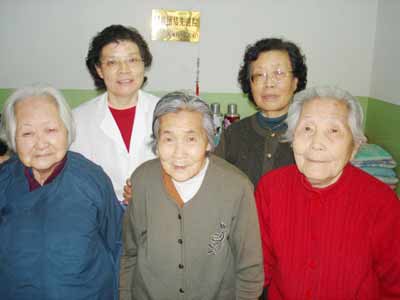
Confucius described old age as a "good and pleasant thing" which caused you to be "gently shouldered off the stage, but given a comfortable front stall as spectator." This honorable sentiment paints a melancholic image of how senior citizens should be treated, given peace in their twilight years while able to freely dispense their wisdom to younger generations. Retirement homes are highly uncommon in rural areas where traditional entrenchment about the nuclear family is mainstream. "Placing your parents in retirement homes will see you labeled as uncaring or a bad son. To abandon one's family is considered deeply dishonorable," said Zhou Rui, a Guangxi native living in Beijing. Even in extreme circumstances, there seems to be little deviation from this belief. When tackling such degenerative illnesses such as Alzheimer's disease, most families would prefer hiring a permanent caregiver than to place their relative in a nursing home. "But since I live in Beijing for my work, and I am an only child, my mother has accepted to go into a home. Better to go against tradition than leave my mother all on her own." In Western civilizations, a disturbing trend has seen us become increasingly uncomfortable with retirement being viewed as the end of one's useful contribution to society. In such settings, Confucius' words may find little hold. In China, however, taking care of one's parents is the lot of all children -- failure to do so would mean a major loss of face for any family. From all sections of society, children receive consistent reminders that they owe everything to their parents and that they must repay this debt in full. This responsibility and the ties it creates are never better illustrated than in the massive human migration seen during the Spring Festival holidays. While this unity may seem eternal, two looming factors may disrupt it. The first is a direct result of China's "one-child" policy. Traditionally, parents were taken care of in old age through having many offspring who could rely on one another. Now, with only one child per family in towns and cities, or two in rural areas, the social attitudes of China are rapidly changing. Already, national media deplore the self-centered attitudes of the "xiao huang di" (little emperors) generation who have been raised as only children and have little respect or time for tradition, preferring instead to focus on improving their own standing. The second is simply that people are living longer than before. At the end of 2005, China counted 144 million over the age of 60, or 11 percent of its total population. Such a rise will bring strain on both the economy and society, both of which will have to readjust to compensate. While this issue can be seen the world over, China must address problems all of its own. Recent efforts by the Chinese authorities to bolster rural healthcare and establish a better social security system have in part been motivated by a single realization: many Chinese families are no longer able to adequately provide for their older members. While the average life expectancy may steadily be improving, China finds itself lacking in related areas: expert geriatric care, widespread knowledge of debilitating conditions such as Alzheimer's or an understanding of the psychological conditions of the elderly. These harsh realities mirror a rise in the importance of nursing homes, lone bastions of competent care for the elderly. Despite familial reluctance at placing their parents in such institutions, increasing evidence can be seen that these constitute a positive environment for China's aged, where they can find companionship and professional care. An unlikely example of this is nestled away from the hustle-and-bustle of Beijing, in a small gated compound near Xizhimen. Ducking past restaurant staff enjoying their lunch-break and the imposing inner courtyards of Maoist residential buildings, one comes across a pleasant garden belonging to the Zhanglanlu Community Home. Outside its entrance, five or six residents enjoy the springtime sun, the women merrily chatting while the men mull over a game of chess. This setting is thanks to the devotion of one woman. Tang Xiumin, a 70-year-old former kindergarten teacher, was asked by the local government to take over the home after her retirement 14 years ago. Since assuming her duties, she has worked ceaselessly to improve both the lives of the residents in her care and the wider understanding of what a retirement home can provide. "Zhanglanlu Community Home was set up and is financed by the local government itself," explains Tang. "All residents here hail from the neighborhood, usually with their families living close by."
Visiting the community home, meeting its staff and seeing how content its residents seem to be would likely dispel many fears among Chinese families that their parents would not be well taken care of. Although relatively small with only 20 beds, the organization behind the nursing home is very well-structured. It is one of three sister homes, each of which catering to old people needing differing levels of care. Zhanglanlu was the first to be set up and takes in relatively spry retirees who are largely able to take care of themselves. Aside from Tang herself, two nurses, two care assistants and one chef complete the staff roster, all of whom seem to enjoy a very close bond with the residents. Furthermore, the home has a partnership with the local hospital, which offers both free monthly check-ups on site but also instant intervention during any health emergencies. The small size of the home when compared to the vast community it services is striking and illustrates social stigma that must yet be overcome. Nevertheless, it possesses a two-tiered admissions system. The first tier is for those applicants who are childless, a description often used by Tang with a weary shake of her head. These are taken in completely free of charge, their entire upkeep provided by the state. The second exists for those with families but whose children are too busy to look after them. In this case, a monthly fee of 650 yuan is paid directly to the local government, offering an affordable option to leaving their parents alone all day. Tang is quick to point out that despite these advantages, misconceptions about the nature of a retirement home are still widespread with many residents very uncomfortable upon arrival. Pangs of rejection and abandonment are common, particularly among widowers. Although the concept of psychological care is very limited in China as a whole, Tang and her staff have established a mechanism which seeks to educate both potential residents and families about life in a nursing home. Zhao Yunhui, the home's doyen at 91 years of age, spoke of her worries at feeling lonely or miserable, a sentiment exacerbated by her having no children. Prior to moving in, she suffered two heart attacks and was not thought likely to live much longer. Eight years later, she now shares a room with two long-standing friends and, although still very frail, appears content. Tang has also set up an open-doors policy, allowing families to visit at anytime, while setting up collaborations with local schools and universities for young people to come and spend time with the residents. Zhao's room-mate, 90-year-old Wang Xiuqing, laughs from her bed and quips: "We even have walking races, because none of us can run anymore." Much as it would be wonderful to imagine the Zhanglanlu model being copied across China, the reality is markedly different. At the end of last year, the State Council published a white paper entitled The Development of China's Undertakings for the Aged. It sets a number of bold targets, including full insurance, adequate medical care and an increase in activities for old people. The plight of the aged in China will go hand-in-hand with that of migrant workers, with the improvement of rural healthcare and with the nationwide expansion of insurance coverage. These three all represent areas into which the central government has poured funds of late, trying to gain a foothold. The future for China's elderly remains uncertain. As the population continues to age and the state moves to accommodate this trend, it is to be hoped that more local governments will take the initiative of setting up their own homes. However, while this solution may be relatively easy to implement in urban centers, the countryside will require a veritable unification by all levels of government. (China.org.cn by staff reporter Wang Ke and Chris Dalby, April 17, 2007) |
| Tools: Save | Print | E-mail | Most Read |
 |
| Related Stories |
