On March 11, 2004, the highly respected British journal Nature published a special supplement entitled "China Voice" in recognition of several positive trends in the country, including China's sustained efforts over many years to turn itself into a world-class scientific power. However, the journal's editor noted, China is not yet fulfilling its scientific potential, with many opportunities lost and world recognition inadequate.
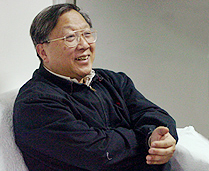
In a recent interview with China's Newsweek magazine, Chinese Academy of Sciences President Lu Yongxiang offered his views on the Nature supplement and on the state of science in the country.
Newsweek: How would you evaluate this special supplement to Nature? Are the articles in the issue accurate representations of actual situations in Chinese science?
Lu Yongxiang: Nature is a world-renowned journal with a very good reputation. Publishing a special supplement like "China Voice" is very rare for Nature -- in fact, this is probably the first time. This indicates that Nature pays close attention to China's scientific and technological development, which, in turn, shows its acknowledgement of China. Without China's rapid development and distinctive progress in science and technology, they would not have published this.
In "China Voice," eight scientists make observations about China's development in science and technology, which are well intended. Some offer constructive and sincere suggestions, which, I believe, will be of great help to China's future development in science and technology.
The history of science, especially of modern science, is not very long in China, about 100 years at most. During much of this short, 100-year history, China was in turmoil. The history of science being on the right track and being considered important since 1949, especially after reform and opening began, is even shorter, 30 to 50 years in total.
Under the circumstances, I believe that it was a great achievement for China's modern science to reach its present state: from laying the foundation to its rapid development since reform and opening. This is a rare thing in the world.
It takes time to develop a scientific culture, construct scientific research bases and inculcate scientific beliefs, thoughts, spirit, and abilities. It is not like commercial or industrial investment. For example, if you invest in a large power plant, you can expect that it will generate electricity in two or three years.
Copernicus, Galileo, and Bruno put forward their own views about the universe back in their own respective times, but 200 years passed before their views were developed into systematic and basic science.
I think that the gap in science and technology between China and developed countries results from historical factors. It is our hope that we can direct our scientific and technological development onto the fast track. However, we should follow the law of scientific development. It might cost the effort of several generations, or even of more than ten generations. From the beginning of the last century to now, five or six generations have contributed to China's modern scientific development.
Newsweek: In "China Voice," Pu Muming writes, "deferring to what the teacher says and accepting doctrines of the classics is the foundation of Confucian education. It is debatable whether this education mode serves as a booster or an impediment to development of Chinese society." Do you agree?
LY: At present, we should not underestimate the influence of feudalism, which lasted several thousand years in China. The respect for teachers advocated by the traditional Chinese culture is right, but the tradition of advocating the practice of positioning by seniority and not encouraging students to outdo their teachers is certain to impede the progress and development of science and technology.
In a comparison with Western education, ours focuses more on inculcating knowledge but less on cultivating abilities; more on instructing students to follow established rules strictly but less on instructing students to explore and be creative; and more on respecting teachers and obeying moral codes but less on encouraging students to outdo their teachers.
In our country, parents and kindergarten teachers prefer to teach children how to do things. In foreign countries, however, people let children learn things by themselves. I saw an example of this kind of education in a German family. The parents let their child crawl on the floor. There was a cup of hot tea on the table and the child wanted to grab it. My first response was to take the hot cup away immediately. However, the parents let him touch the cup and realize that it was hot, which would prevent him from touching the cup next time. Of course, the prerequisite to this practice was safety from burning the child.
When kindergartens bring children to picnics, they only bring rice, salt, and kitchen utensils. They need to look for water and firewood in the surrounding area. They cultivate children's spirit to explore when they are only four or five years old.
Newsweek: It seems that science in China has not obtained the status that Western countries have, nor the respect it is due.
LY: In China, it is education that enables us to know and understand science. In the West, however, it was the struggle with nature and religion that built up the prestige of science.
Many scientists, such as Copernicus, Galileo and Bruno, were attacked or even burnt to death after they put forward new ideas and new concepts. Decades or even more than a century later, their ideas were proved by application to be correct. Science has won the victory and thus acquired great prestige in society.
In early days of the development of modern science and technology, only a minority of people benefited from it. Later, the majority of people benefited, which convinced them of the value and importance of science and technology. In China, this process is lacking. Modern science is introduced from abroad, so science and technology do not mean much to common people.
There must be a historical process before Chinese people can have a correct understanding of science. In our effort to make clear to them the importance of science and technology, the basic issue is the contribution of our own scientists, especially important discoveries and inventions made on our own soil. Only if this happens, can we expect further improvements in the scientific spirit and beliefs of common people.
Newsweek: Yang Xiangzhong writes in "China Voice" that China's investment in scientific research is insufficient. Do you think this is a big issue?
LY: Investment in scientific research has increased greatly in recent years. But still, the ratio of this investment to GDP is less than that of developed countries, which has already reached 2 to 3 percent. The ratio in China has reached 1.2 percent, better than the average ratio, about 1 percent, of developing countries.
The next step for China is to increase this ratio, say, to 1.5 percent by 2005, to 2 percent by 2010 and to 2.5 to 3 percent by 2020.
True, investment is very important in developing science and technology, but the optimum use of resources and talents plays a more important role. If there were no talent, excellent scientific ideas or reasons, invested money would be wasted. History shows that many scientists have made great scientific achievements with little money. Einstein, who put forward the Theory of Relativity, had little money; the German scientist Wegener, who put forward the Theory of Plate Tectonics, had little money as well.
In short, scientific talent and ideas are more important than money.
Newsweek: In past decades, China has had one contradiction that has not been resolved well. That is the contradiction between investment in basic research and in application research. With limited funds, more has been invested in application research. Basic research is usually ignored.
LY: This is a common problem in all developing countries. Our investment in basic research is really too low, accounting for only 6 percent of the total investment in science and technology. The figure in developed countries is generally 15 to 20 percent; in other developing countries, it is around 10 percent. In some countries it may be higher, such as India, where it is over 10 percent.
This phenomenon is connected with tradition and governmental understanding of scientific development in developing countries. After China began its opening and reform, some people thought that investment in basic research should reap quick benefits. In fact, basic research should serve to discover and accumulate new knowledge and foster new talents, laying a good foundation and blazing a way for application research and technological invention. The benefits of basic research are comprehensive and long term.
It is not only scientists and administrators who should have a deep understanding of the importance of basic research. The entire society should have a correct understanding of it. Then it will be easier to decide the proper ratio for investment in basic research. In addition to deciding the proper investment ratio, it is also essential to select the proper key field, and then to select talents or team players. We should accord full respect to scientists and their decision-making ability in innovation; invest consistently; introduce a proper competitive mechanism; and establish a scientific evaluation system. The lack of competition and evaluation is wrong. However, it is not conducive to the development of basic research either if the evaluation period is too short or done hastily or unscientifically.
Newsweek: Modern science and technology are developing very rapidly. Decision-makers may not fully master the development of various disciplines in a short time. Does this affect decisions on scientific and technological policy?
LY: It is impossible for decision-makers to know everything well. I majored in machinery control. It is impossible for me to understand leading-edge life science and technology. To solve this problem, we should build a method of democratic science and democratic decision-making. We should depend on excellent and groundbreaking scientists in this field. We should not only listen to opinions of domestic scientists, but also read analyses by foreign scientists and examine the scientific research plans of the United States, Europe and Japan, which are leaders in this field.
Sci-tech management departments should consider some strategic layout according to trends in science development and the requirements of society. The choices made by the government should not be too detailed or too microcosmic, because that will hinder innovative ideas. Many of these actually occur outside the plan. Albert Einstein's Theory of Relativity is definitely an unplanned outcome.
The main task of the government is to judge where the key field of our basic research should be and to find and select farsighted scientists of great potential. Then let them make decisions and select their research direction. For example, it is widely believed now that life science is poised to make significant breakthroughs. Therefore, research on it should be enhanced and the investment ratio should be increased. This is the common understanding throughout the world. However, what to do and how to do it are jobs that the life scientists need to consider. Creative scientists are welcome to do the research.
Now, the foundations depend on experts to make an appraisal. Fine. However, if all projects have to be evaluated there, some unique ideas may not pass the appraisal.
I think scientific groups and foundations of universities should provide certain funds to aid those who have creative and unique ideas to carry out their research. The diversity of science should not be ignored.
In scientific history, a number of significant discoveries were made accidentally. However, to the scientist himself, the field he chose was usually the field in which important breakthroughs were brewing. For example, Francis Crick's discovery of the double helix structure of DNA seems accidental and out of plan. But in his time, DNA was already a hot issue. British scientific organizations were keen on this area. They thought Crick's work was a frontier science and they should look into it. Although they didn't provide much money to Crick, at least they accepted his idea and encouraged him instead of excluding him.
Newsweek: "China Voice" also mentioned that China's ability to create an environment to attract overseas Chinese scholars is of vital importance to its future development.
LY: It is important to establish a platform for innovation for overseas scholars who want to return to China. However, it is not realistic for China to try to attract overseas scholars with American treatment. On the one hand, we need to create conditions to allow them return; on the other hand, some who cannot come back for various reasons and stay abroad can also play their roles. If we have excellent groups in China, we can establish international cooperation with excellent foreign scientists.
Science is a naturally international innovative activity. The introduction of famous scientists is important. However, more focus should be put on young people with more potential.
Newsweek: You read "China Voice." Do you think other scientific research decision-makers will also read it?
LY: I think most of them will read it. It will have impact on China's scientific research system, but we should not attach excessive importance to it. Domestic scientists are also conducting wide and in-depth research and discussion on the problems mentioned in the magazine. We have a common understanding on many problems. Certainly, it is more helpful for overseas scholars to join the discussion, too.
We should be confident about China's situation. First, our education level will continue to improve. Second, China is already open to the outside world. Our talents can have constant exchange and cooperation with the world. Now, China is giving great attention to science and technology. This is very conducive to scientific development.
Furthermore, China has huge development demand. The scientists' urge to innovate is one motivation for sci-tech development. Another is social demand. The demand from society is huge: pressure on population and health, shortage of resources and energy, and pressure of global competition -- they all give impetus to China's sci-tech development.
(China.org.cn translated by Ni Xiaoqiang and Wang Qian, April 26, 2004)