 Share:

Villages in Huzhou, east China's Zhejiang province, are leveraging their unique local resources to promote community prosperity while balancing economic growth and environmental protection. Youth engagement plays a vital role, as more young people are returning to the countryside with innovative ideas that are helping to drive sustainable development.
Yucun village in Anji county, Huzhou city, exemplifies this transformation. Guided by the principle of "lucid waters and lush mountains are invaluable assets," the former mining village has moved away from quarrying stones to a development model that focuses on its natural scenery, clean air and local culture. In 2021, it was recognized as one of the best tourism villages by the United Nations World Tourism Organization (UNWTO), gaining national acclaim.
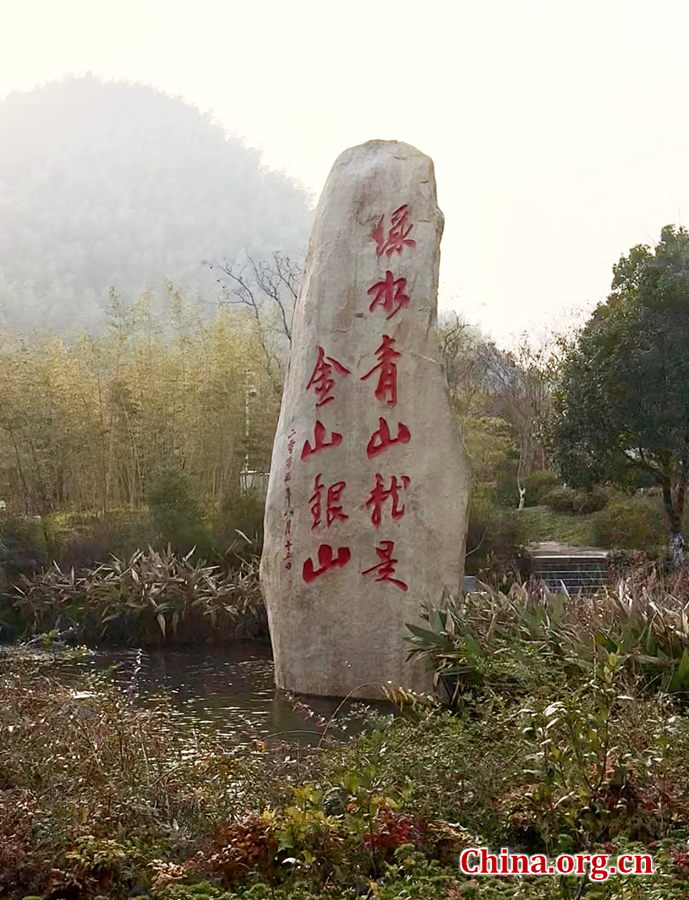
A stone engraved with the phrase "lucid waters and lush mountains are invaluable assets" at Yucun village in Anji county, Huzhou city, Zhejiang province, Dec. 1, 2025. [Photo by Chen Xinyan/China.org.cn]
Last year, the village welcomed a total of 1.2 million visitors, with tourism revenue accounting for nearly 70% of villagers' income.
Yu Xiaoping, deputy secretary of the Communist Party of China (CPC) branch of Yucun village, explained, "In recent years, our youth engagement efforts have attracted many young people to return with new business models."
While the village initially offered relatively simple activities like fruit picking and river rafting, it now boasts a diverse range of options, including cafes, milk tea shops, restaurants and bars. "As a result," Yu said, "the overall business landscape in the village has become increasingly rich and varied."
Consequently, Yucun achieved a collective economic income of 22 million yuan and a per capita income of 74,000 yuan last year.
Xiaopu town in Changxing county is also advancing rural revitalization through its rich natural resources. Renowned as the "Home to Ancient Ginkgo Trees," this region is famous for its 12.5-kilometer ginkgo corridor, which forms the Baduka scenic area.
In 2019, five villages in the region — Fangyi, Xiaopu, Fangyan, Panlinan and Dakakou — established a cooperative to promote shared prosperity by pooling resources and expertise.
"We have hired professional managers to develop our scenic area," said Wang Chunhua, secretary of the CPC branch of Dakakou village. "The results this year have been promising, bringing in several hundred thousand yuan from tourism alone."
A key aspect of this development has been the emphasis on maintaining the ginkgo trees. "We have invested a lot of efforts, particularly last year, by consulting experts from the Zhejiang provincial agricultural department to ensure their proper care," Wang noted.
As a result, ginkgo-themed industries are thriving, featuring cafes, ginkgo noodles and various cultural and creative products, which have helped foster community engagement and enhance the village's character.

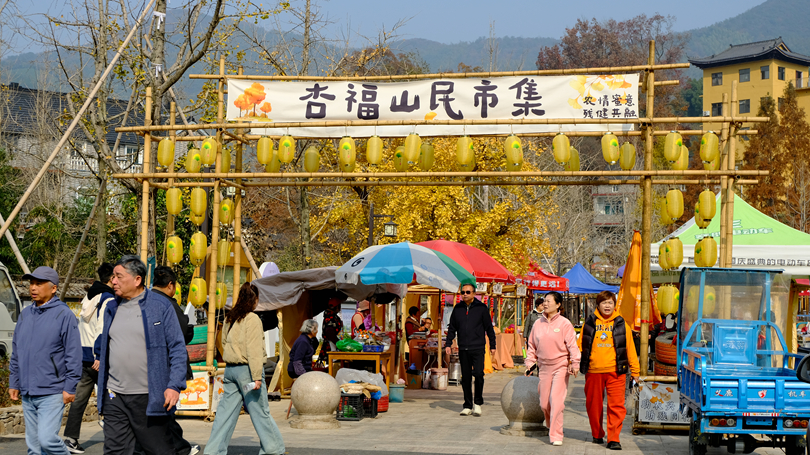
A ginkgo-themed market is held at the Baduka scenic area in Xiaopu town, Changxing county, Zhejiang province, Dec. 1, 2025. [Photo by Chen Xinyan/China.org.cn]
Wu Nanxing, founder of a local ginkgo noodle processing factory established in 2020, emphasized the focus on quality. He uses mountain spring water to enhance the noodles' texture and plans to introduce his product to the international market. "As long as the product is exceptional, it will find demand," he said, noting the unique character of his noodles made with ginkgo powder.
Miaoxi county in Huzhou is also boosting its rural areas through new business models and youth engagement, as exemplified by Miaoxi Inn. Run by a post-'90s entrepreneur who returned home after graduating from university, the guesthouse has attracted a steady stream of tourists with its unique tea garden and relaxing bamboo groves.
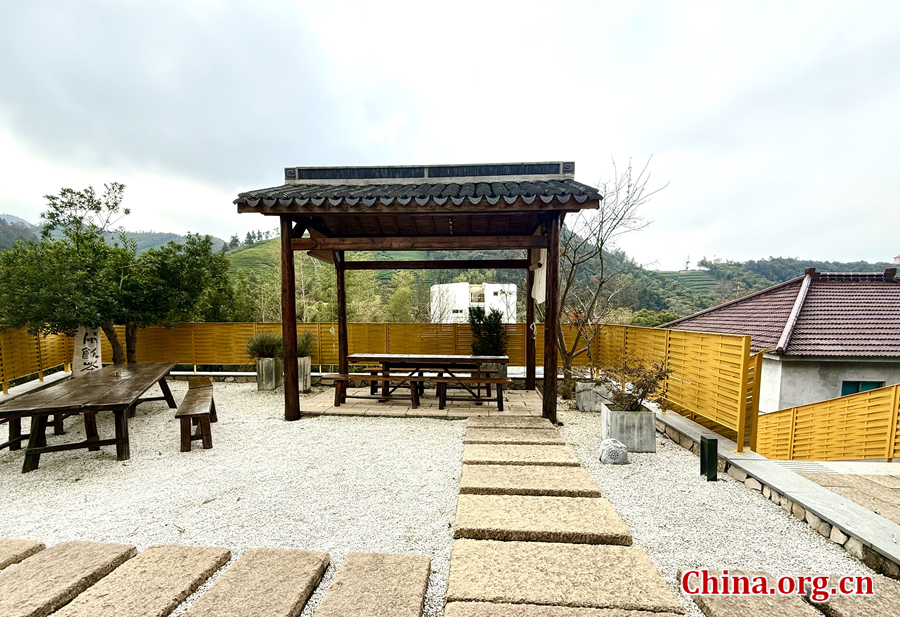
Miaoxi Inn located in Miaoxi county, Huzhou, Zhejiang province, Dec. 2, 2025. [Photo by Chen Xinyan/China.org.cn]
"We have 11 guesthouses here, along with additional projects like cafe, a Western-style camping site and a firefly park," said Shi Yizhong, secretary of the CPC branch of Longshan village in the county. He noted that the village's collective operating income has increased significantly, surging from over 190,000 yuan in 2019 to 1.38 million yuan by last year.
The involvement of young people has been crucial in driving this income growth through their introduction of innovative ideas. As incomes have expanded, older residents who were previously unfamiliar with these ideas have gradually embraced the new projects.

A pet hotel located in Miaoxi county, Huzhou, Zhejiang province, Dec. 2, 2025. [Photo by Chen Xinyan/China.org.cn]
"We young people have lots of ideas," explained Zhang Yaya, the 23-year-old manager of Miaoxi Inn. "By keeping up with market trends and what people like, we're able to brainstorm creative concepts to draw in more customers."


 京公網安備 11010802027341號