

 Share:

The oracle bones of ancient China refer to the carved writings on turtle shells and ox shoulder blades used for divination during the Shang dynasty some 3,300 years ago. Far more than simple archaeological curiosities, they present something profound: the earliest known Chinese writing and the philosophical foundations that continue to shape China today.
These artifacts were recently examined by foreign experts during Beijing's "China Tour," a four-day trip through Henan province, organized by the Beijing Overseas Talents Center in collaboration with authorities in Zhengzhou and Anyang.
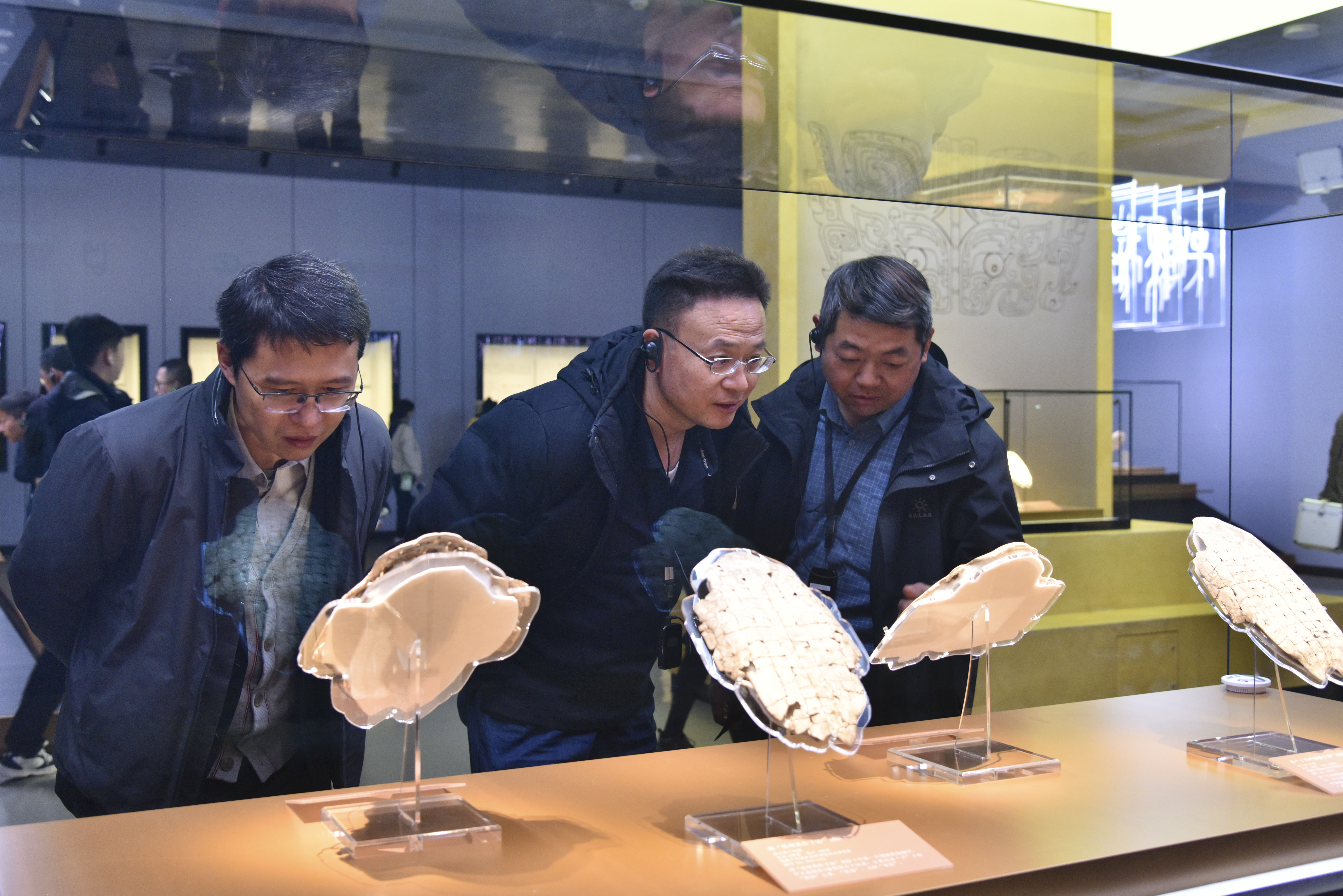
Foreign experts examine oracle bones at the Yinxu Museum, Anyang, Henan province, Nov. 22, 2025. [Photo courtesy of Beijing Overseas Talents Center China Tour]
Archaeologists in China have so far unearthed between 100,000 and 200,000 oracle bone fragments, revealing an organized, large-scale bureaucratic system operating around 1300 B.C. The sheer volume points to divination as a collective effort, not a few shamans practicing in isolation. This is an early sign of coordinated activity (at scale) within an ancient Chinese civilization.
What makes these artifacts particularly significant is their continued relevance. Unlike other ancient languages and their writing systems, the oracle bone characters have direct modern Chinese language equivalents, demonstrating a continuation of language. Bone fragments were heated until they cracked and were then interpreted by court diviners who sought guidance on weather, warfare, royal succession and other questions.
Language encodes philosophy. The way we speak shapes how we think, and even though the language carved into these ancient bones is still being deciphered, we can observe the early concepts of harmony (和), duty (義) and balance between opposing forces. Whether we see it the direct continuation of language or in observations of the cultural infrastructure behind this collective activity, these principles remain very much alive in modern China.
Two hundred kilometers west of Anyang, where the Yinxu Museum preserves the remains of the Shang dynasty capital and China's earliest confirmed writing system, is the Red Flag Canal. This canal was constructed between 1960 and 1969 by residents of Linxian county (now Linzhou), who hand-carved 1,500-kilometers of waterway through the Taihang Mountains.
The canal transformed a drought-stricken region and became a cornerstone of China's development miracle. Today, while not used as a source of drinking water, it has become one of the best case studies for the contemporary Chinese spirit.
Both the Red Flag Canal Memorial and waterway were visited by foreign experts when they stayed at the Hongqiqu Executive Leadership Academy located in Linzhou, Henan province. The campus serves as an education and training center for Chinese officials.
Most visitors’ agenda will include sightseeing and visits to important revolutionary sites, followed by classroom sessions and group study. It is part of China's broader system of official education that includes several national executive leadership academies in locations like Pudong, Jinggangshan and Yan'an, all sites with revolutionary significance.
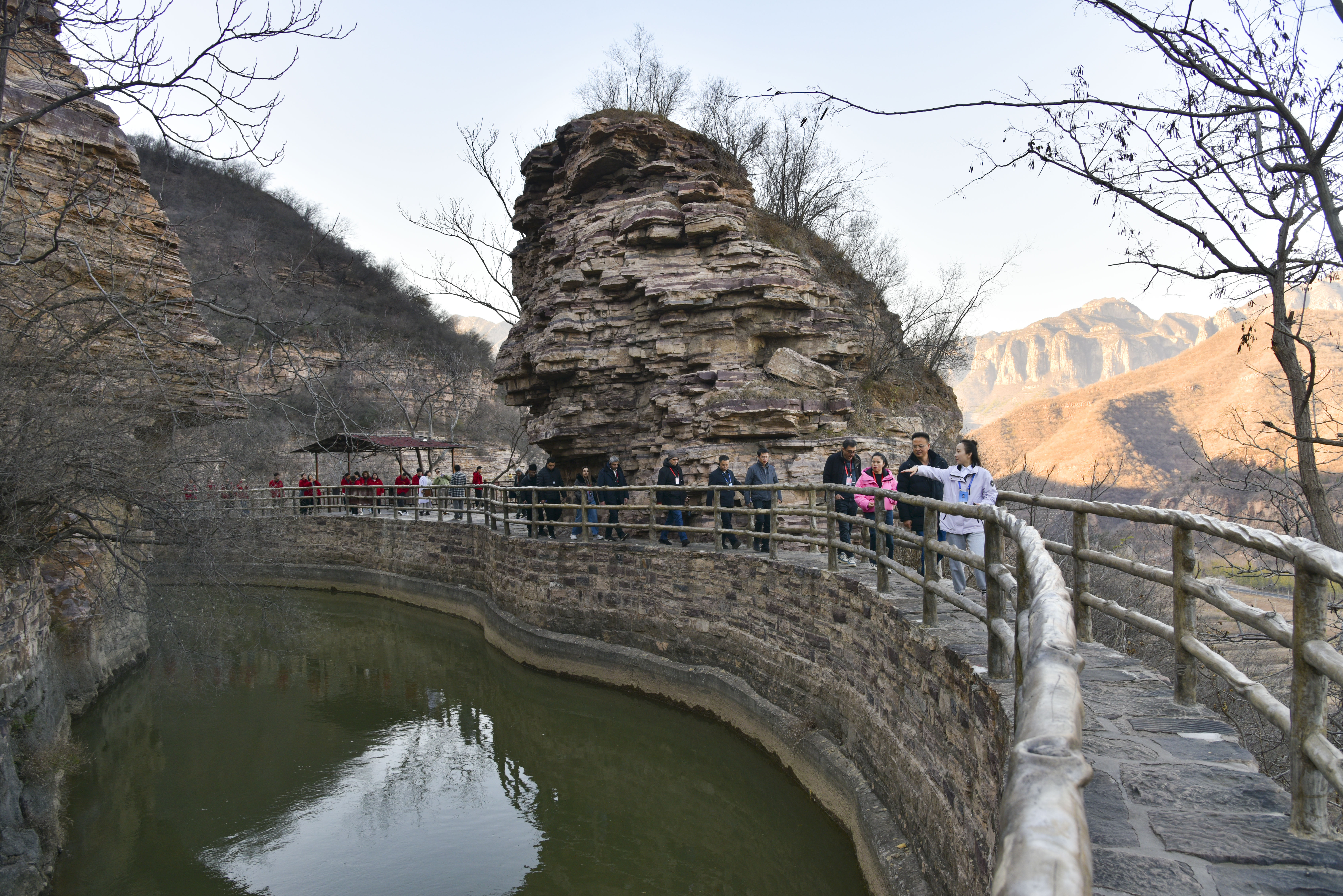
Foreign experts walk along a mountainous stretch of the Red Flag Canal, Henan province, Nov. 21, 2025. [Photo courtesy of Beijing Overseas Talents Center China Tour]
Today the Red Flag Canal stands as a concrete embodiment of what is referred to in Chinese discourse as "perseverant hard work" (艱苦奮斗) and "self-reliance" (自力更生). Examples from more recent history, as well as older cases like the Silk Road and the Great Wall, have increasingly been framed as the moral core of China's modernization. Out of this has emerged the idea of the "Red Flag Canal Spirit," defined by perseverance, unity, and resourcefulness in the face of adversity. This moral framework continues to shape contemporary development discourse. Across large portions of the news media and even within business settings, this spirit appears as a recurring point of reference.
During their tour of Henan, foreign experts visited several local enterprises where the concepts of harmony, collective coordination and thinking of the future — whether it be through deities and bones, or ensuring your children have water — have since manifested in corporate governance structures. The very fact that foreign experts from Beijing were invited to roundtable discussions by Chinese companies reveals organizational decision-making being centered around consensus-building.
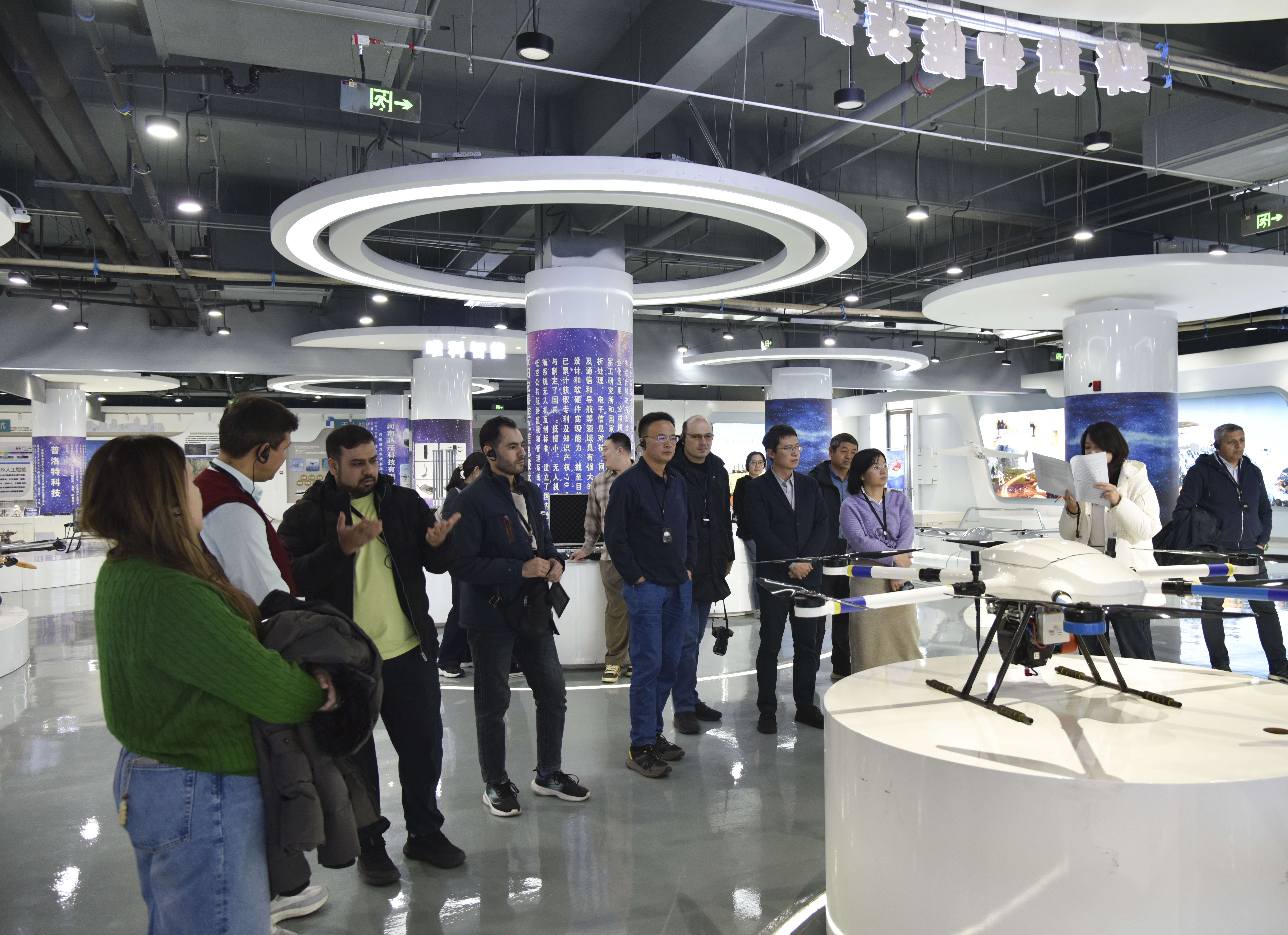
Foreign experts take part in a tour of Anyang UAV Industrial Park, Henan province, Nov. 22, 2025. [Photo courtesy of Beijing Overseas Talents Center China Tour]
In broader society we can see these themes create a distinctive vocabulary for discussing progress and modernization. In today's China, there are social expectations around collective responsibility, shaped by this past and these words.
Individual success carries implicit obligations to family, community and nation. This shapes everything from educational priorities to philanthropic activities, even extending to career choices. This is a fundamentally different social dynamic when compared with more individualistic societies.
Political communication in China reflects all of this. It draws heavily on these historical events in the current vocabulary, making governance narratives deeply resonant with cultural memory. When officials speak of Chinese modernization (中國式現代化) or people-centered development philosophy (以人民為中心的發展思想), they introduce conceptual frameworks with the same feeling as the Red Flag Canal and to some extent, the oracle bones.
Many in China today continue to be influenced by the ideas surrounding the Red Flag Canal Spirit. It clarifies the national mindset that outsiders will inevitably encounter. By framing challenges not as policy problems needing technical fixes, but as moral tests demanding national resolve, on a vast scale, with the same forward-looking spirit as those who built the canal or preserved ancient bones, we can begin to grasp how China mobilizes collective will across generations. This linkage of ancient vocabulary and the traits it embodies becomes modern policy and capability.


 京公網安備 11010802027341號