 Share:


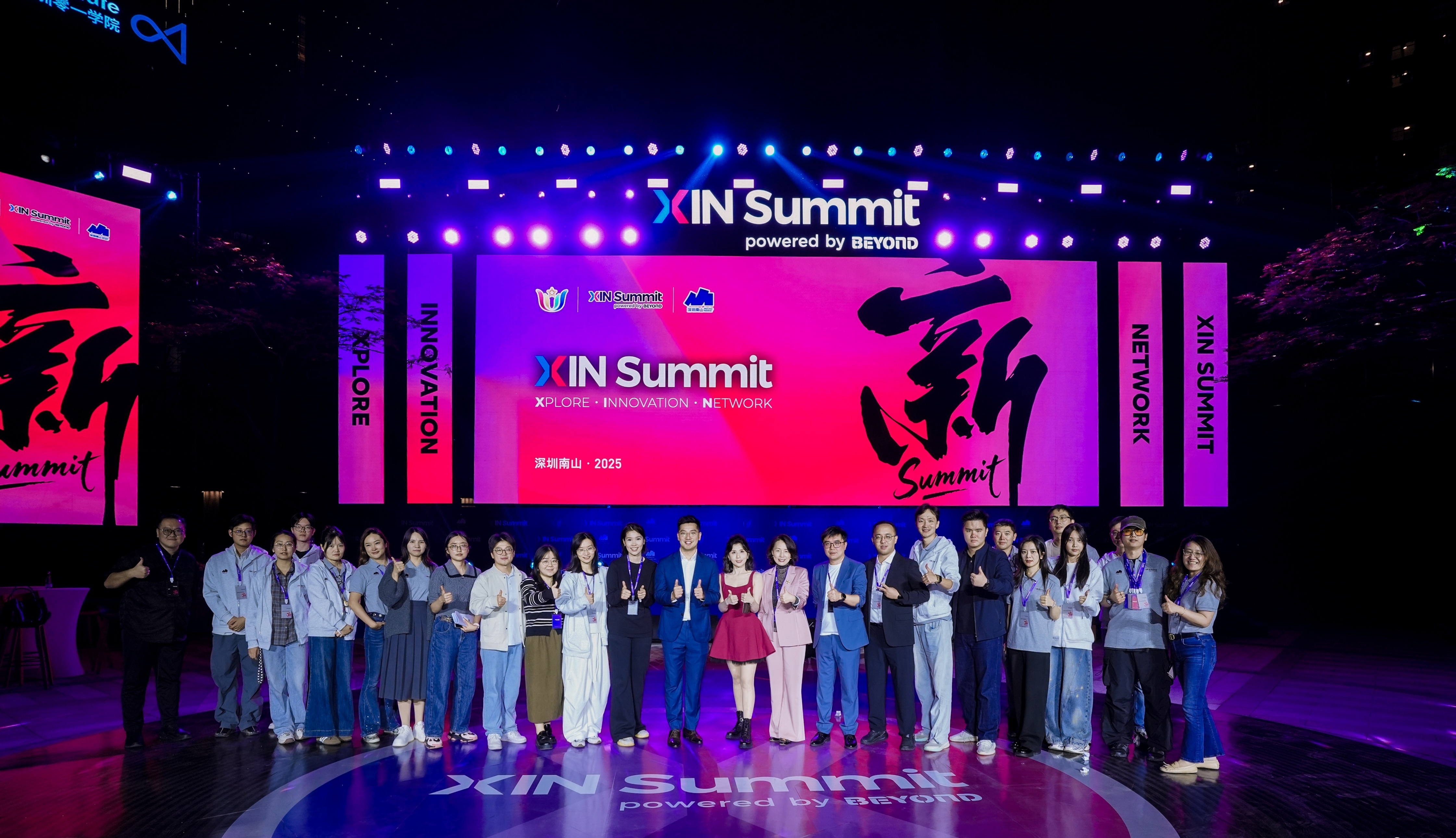
The XIN Summit opens in Nanshan district, Shenzhen, Nov. 14, 2025. [Photo courtesy of XIN Summit]
Shenzhen's youngest tech founders are betting that their next edge in artificial intelligence will come from hardware, not apps, fueled by the city's supply chain advantages. In the city's Nanshan district, over 5,000 people crowded the XIN Summit earlier this month to prove it.
More than 150 startups exhibited at the three-day event, alongside over 100 media outlets and 100 investors, all aiming to turn prototype ambitions into market share. Organizers, led by BEYOND Expo, described the field, dubbed the embodied AI sector, as one of China's best opportunities for global technology leadership.
"AI hardware represents one of the most critical frontiers where China can lead globally," said Lu Gang, founder of TechNode and co-founder of the BEYOND Expo. "Especially in the Guangdong-Hong Kong-Macao Greater Bay Area (GBA), which has a complete hardware supply chain and dense innovation clusters."
The vision aligns with the country's emphasis on AI and next-generation hardware as part of its push to cultivate "new quality productive forces." That ambition was on full display in August at Beijing's inaugural World Humanoid Robot Games, with Shenzhen-based enterprises like UBTECH and EngineAI among the competitors.
Shenzhen itself is well-positioned to take advantage of the embodied AI sector, with over 2,000 AI companies and a robotics cluster comprising 74,000 firms. The city's proximity to other manufacturing hubs in the GBA, such as Dongguan and Huizhou, also gives local startups immediate access to thousands of suppliers, world-class assembly lines and logistics networks.
High participation and enthusiasm at the summit revealed a sector picking up steam. The floor was crowded with the kind of gadgets that suggest no object is too mundane to be given a brain: AI-powered shoulder massagers, smart animal collars and even AI-powered fish tanks.
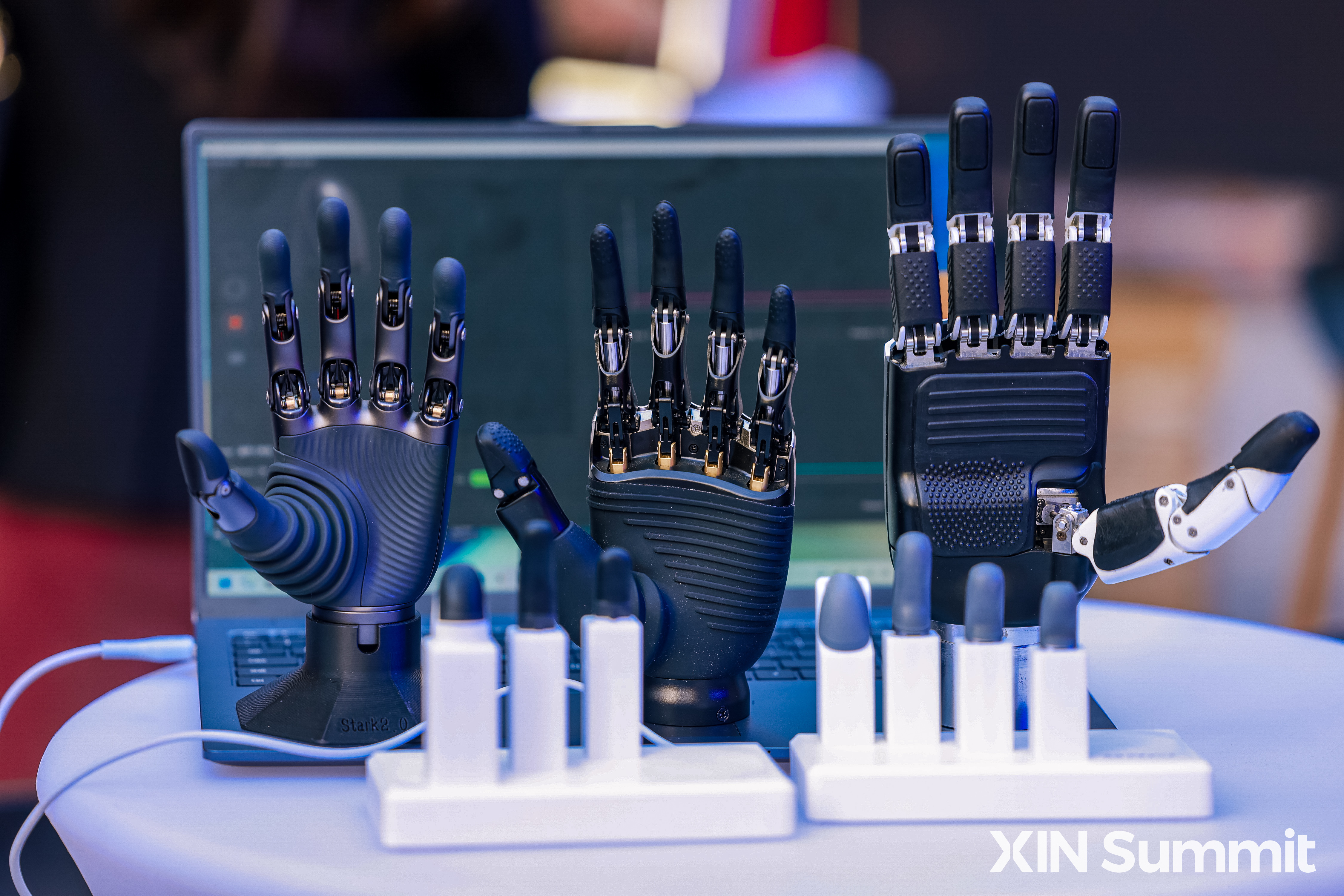
Robotic hands and prosthetic devices on display at XIN Summit in Nanshan district, Shenzhen, Nov. 15, 2025. [Photo courtesy of XIN Summit]
RheoFit, a startup specializing in AI-powered massage rollers, used the summit to attract new customers and partners, having recently received Pre-A funding from Chinese social platform Xiaohongshu.
Dolores Pei, RheoFit's overseas marketing director, attributed much of the company's early growth to Shenzhen's capital-rich environment and the dense network of suppliers willing to negotiate favorable terms.
The company also benefits from the city's mature business infrastructure, including curated legal and IP services that help them avoid "ill-suited partners due to inexperience," Pei added.
That ecosystem support comes primarily through organizations like Shenzhen InnoX Academy, which backs RheoFit and many other startups exhibiting at the XIN Summit.
"Costs here are about one-tenth to one-fifth of Silicon Valley, and efficiency is five to 10 times higher," said Siya Su, senior brand manager at Shenzhen InnoX. "That means quick moves from prototype to mass production, with support in talent, funding and global market access."
"At Shenzhen InnoX Academy, we have our own prototyping lab and shared factory, so startups can quickly create prototypes, small batches or even move to mass production, enabling rapid product iteration," Su added.
For Kamingo, which produces modular kits that can turn pedal bicycles into electric bikes, Shenzhen serves as the perfect launchpad for markets far beyond China.
"Shenzhen is a city of innovation and has a strong supply chain, so it's easy to find qualified manufacturing partners here," said Lea Liu, Kamingo's brand manager. She added that the company, though only a few years old, is already using these advantages to compete internationally.
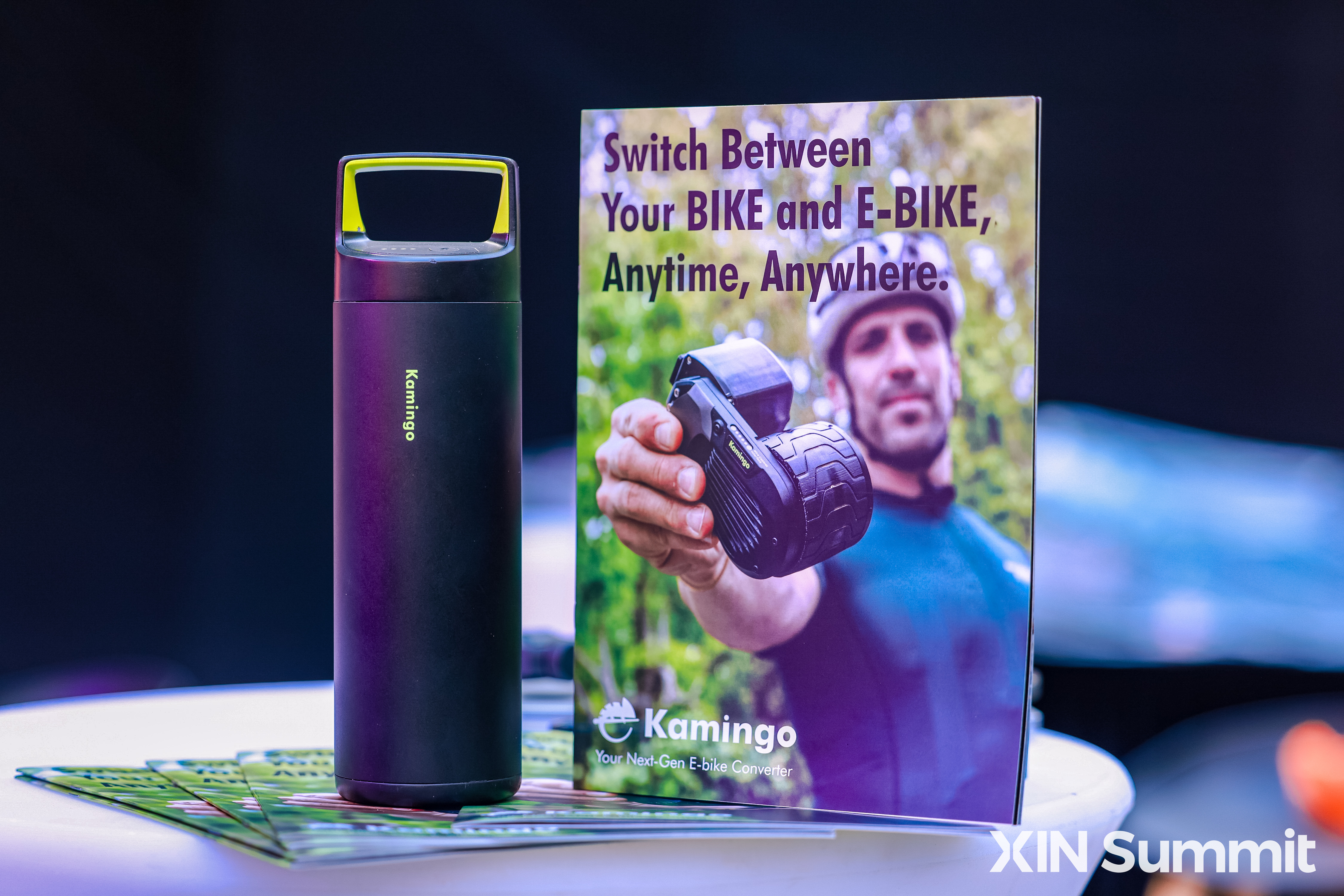
Kamingo's e-bike converter on display at the XIN Summit in Nanshan district, Shenzhen, Nov. 14, 2025. [Photo courtesy of XIN Summit]
And it's not just local startups benefiting from this environment; foreign entrepreneurs are increasingly drawn to what Laurent Le Pen, CEO of Oxtak and a three-time founder in the region, calls the "new Silicon Valley."
Le Pen, whose company is developing a handheld AI assistant called Moneypenny, said the region's density of talent creates a "speed-to-market magic" that helps startups quickly build and launch new devices.
"I am a strong believer that ideas come everywhere in the world at the same time, but being in Shenzhen is a huge advantage when it comes to physical tech products," Le Pen said. "Without the GBA's magic, Moneypenny would be a theoretical tool; here, it's battle-tested in real-world telecom and IoT deployments."

Laurent Le Pen, CEO of Oxtak, speaks during a panel discussion at the XIN Summit in Nanshan district, Shenzhen, Nov. 16, 2025. [Photo courtesy of XIN Summit]
"China adopts and iterates tech faster than anywhere else these days," Le Pen said. "As a tech optimist, I am convinced international cooperation will help us live in a better world through tech innovation."


 京公網安備 11010802027341號