 Share:


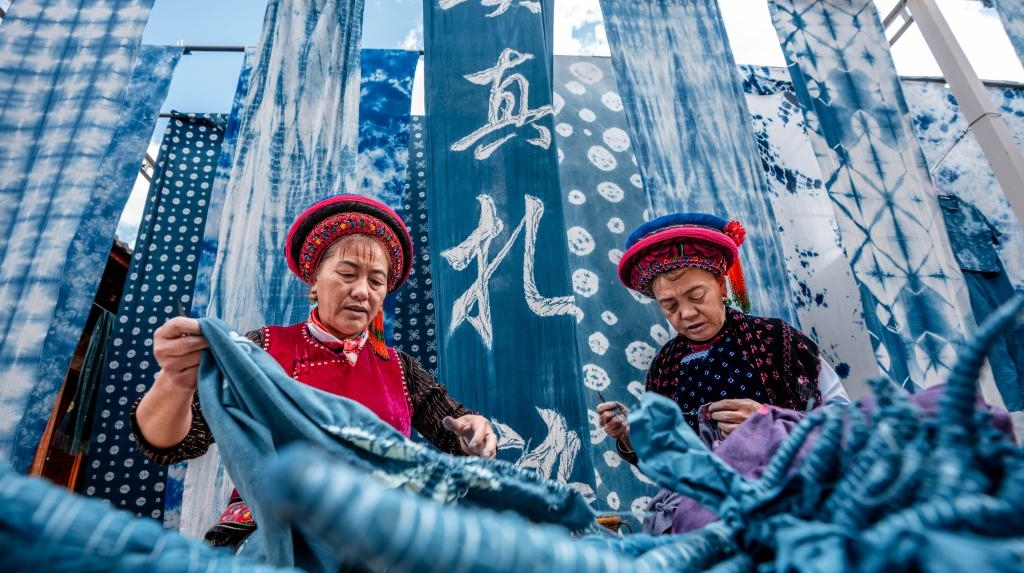
白族扎染技藝傳承人段銀妹(左)和手工藝人段利蘭在周城村“璞真染坊”拆花(11月21日攝)。周城,位于大理白族自治州大理市喜洲鎮,東臨洱海、西枕蒼山,是云南省最大的白族自然村,也是著名的“白族扎染之鄉”,全村現有扎染經營戶200多家,從業人員4000余人。作為大理地區傳統手工印染工藝,白族扎染距今已有上千年歷史。白族扎染以板藍根為主要染料,工序包含繪圖、制版、印花、扎花、染色、漂洗、拆花、晾曬等。其中,扎花、浸染為核心步驟,手工藝人執針走線,在布料上扎出不同類型的圖案,再用植物染料染出藍底白花、生靈百態。2006年,白族扎染被列入第一批國家級非物質文化遺產名錄。[新華社記者 胡超 攝]
Duan Yinmei (L), an inheritor of the tie-dye technique of Bai ethnic group, and handicraftsman Duan Lilan untie knots on fabrics in a dyehouse in Zhoucheng Village of Dali Bai Autonomous Prefecture, southwest China's Yunnan Province, Nov. 21, 2025. Known as the hometown of the tie-dye technique of Bai ethnic group, Zhoucheng Village hosts over 200 households engaging in tie-dye businesses, with the number of employees exceeding 4,000. As a traditional folk technique of the Bai ethnic group, tie-dye boasts a history spanning over a thousand years and was included in the first batch of China's national intangible cultural heritage list in 2006. Tying and dyeing are the core steps in the process of making indigo tie-dye products. Artisans use needles and threads to create various patterns on the fabric, which are then dyed with plant-based dyes, resulting in blue backgrounds adorned with vivid white patterns. (Xinhua/Hu Chao)


 京公網安備 11010802027341號