Share:

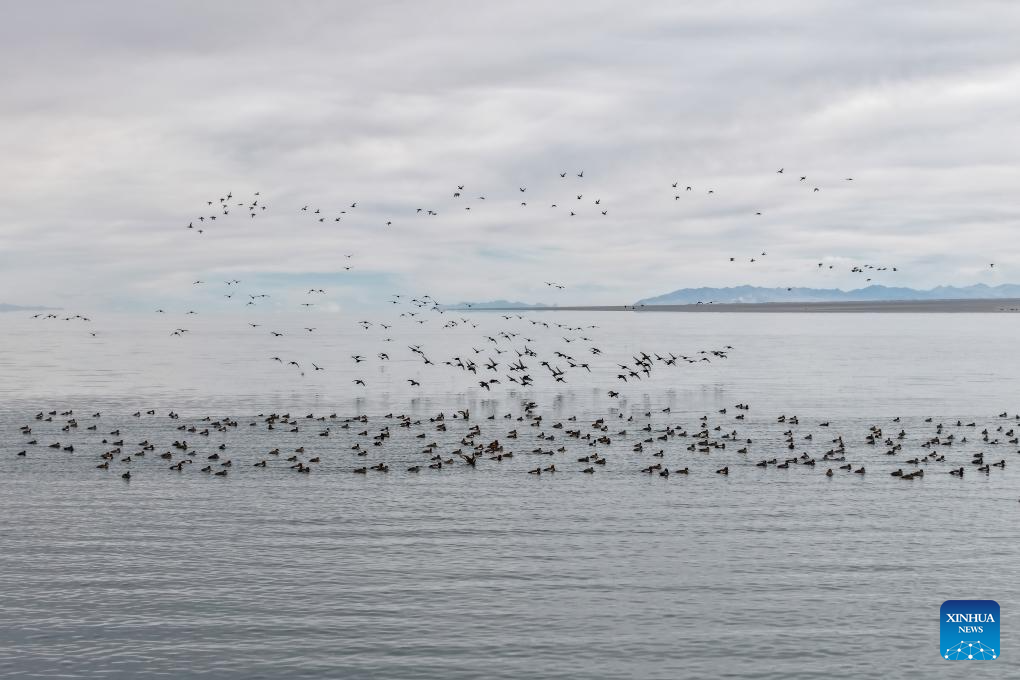
11月16日,一群水鳥(niǎo)在甘肅省阿克塞縣大蘇干湖省級(jí)候鳥(niǎo)自然保護(hù)區(qū)活動(dòng)覓食(無(wú)人機(jī)照片)。入冬以來(lái),位于甘肅省酒泉市阿克塞哈薩克族自治縣境內(nèi)的“姊妹湖”——大、小蘇干湖陸續(xù)封凍。大、小蘇干湖由祁連山冰雪融水匯聚而成,雖一水相連,卻呈現(xiàn)“上游小蘇干湖為淡水湖、下游大蘇干湖為咸水湖”的獨(dú)特現(xiàn)象。它們共同在廣袤戈壁中滋養(yǎng)出一片生機(jī)盎然的生態(tài)濕地,成為我國(guó)候鳥(niǎo)遷徙路線上重要的中轉(zhuǎn)站和繁殖棲息地之一。[新華社記者 郎兵兵 攝]
A drone photo taken on Nov. 16, 2025 shows water birds foraging at the Dasugan Lake Provincial Migratory Bird Nature Reserve in Kazak Autonomous County of Aksay, Jiuquan, northwest China's Gansu Province. Dasugan Lake and Xiaosugan Lake are connected and are both formed by the meltwater from the Qilian Mountains. A unique phenomenon is that the upstream Xiaosugan Lake is a freshwater lake, while the downstream Dasugan Lake is a saline lake. Together, they nurture a vibrant ecological wetland in the vast Gobi Desert, serving as an important stopover and breeding habitat for migratory birds along China's migration routes. (Xinhua/Lang Bingbing)


 京公網(wǎng)安備 11010802027341號(hào)